
The right packaging depends on what you are sending, not simply what happens to be nearest. A jumper and a boxed games console face different risks. Begin with the item’s weight, shape, fragility, surfaces and sensitivity to bending or moisture.
Choose the outer packaging
Mailing bags
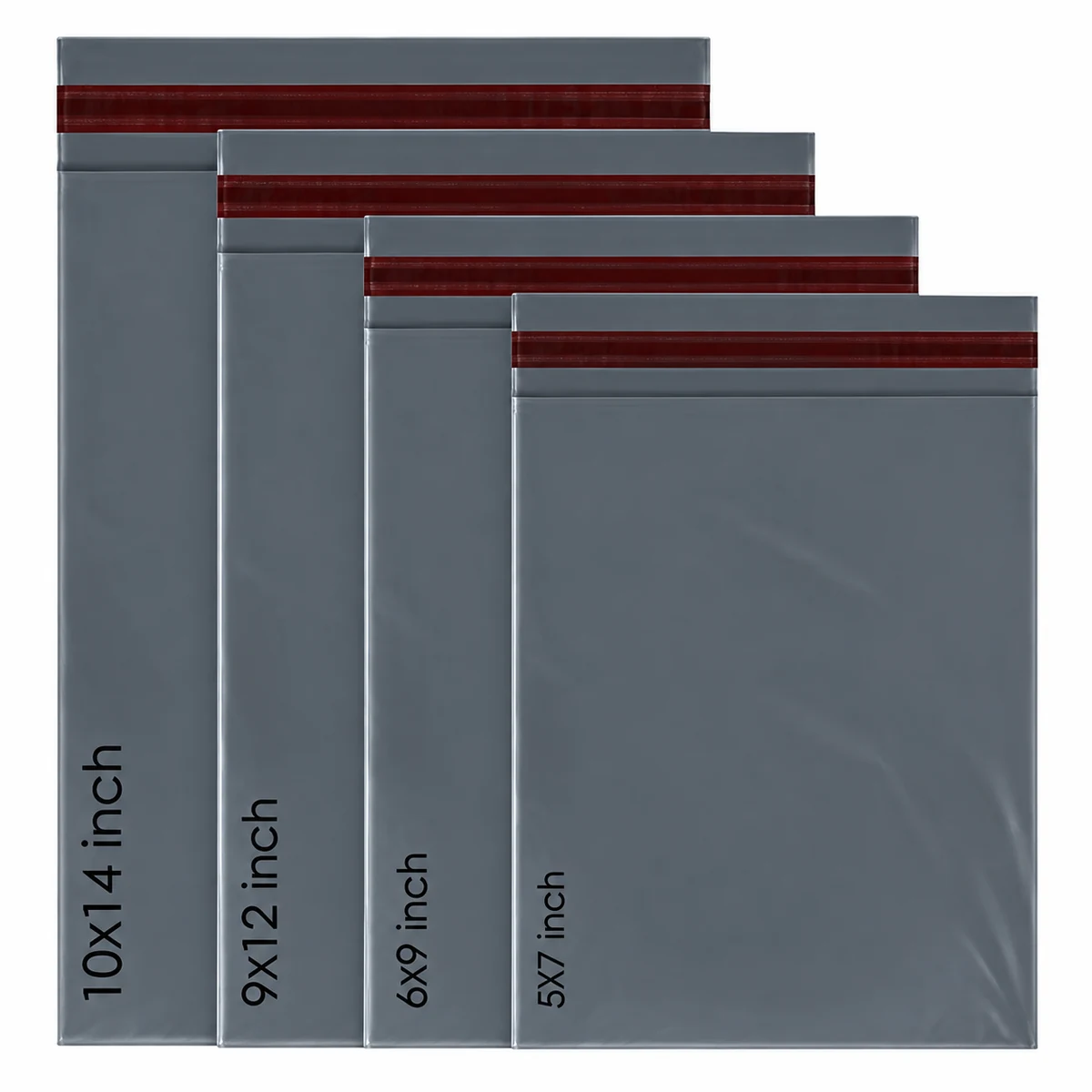
Grey mailing bags are a space-efficient choice for soft, non-fragile items such as clothing. Fold the item neatly, use a clean inner layer when appropriate and remove excess air before sealing. A bag is not a substitute for impact protection.
Padded envelopes
Padded envelopes suit smaller, relatively durable products that need light cushioning. Do not force a thick object into an envelope or use one when the item can bend, crush or move sharply inside.
Corrugated boxes
Use a sound box for fragile, heavy, valuable or crushable items. The box should leave room for protection around the product without creating a large empty space. Remove or fully cover old barcodes and addresses if reusing a box.
Add protection for the actual risk
Bubble wrap provides impact protection and helps separate components. Wrap vulnerable corners, screens and protruding parts, then secure the wrap without applying tape directly to a collectible box or finished surface.
For electronics, use suitable protective material and keep plugs or loose accessories from striking the main item. Fill remaining voids so the contents do not gather momentum inside the parcel. A gentle shake should not produce obvious movement.
Seal the parcel properly
Use purpose-made packing tape on box seams and reinforce areas carrying the load. Do not rely on decorative tape or a carrier label to hold a parcel closed. On mailing bags, use the integral seal and add tape only where it improves the closure without creating loose edges.
Apply a clear shipping label
Place the label on the largest flat face, away from seams, corners and openings. Keep every barcode flat and unobstructed. Remove or cover competing labels. Standard 4×6-inch (100×150 mm) thermal labels work with many marketplace and UK carrier workflows, but always use the format specified for that shipment.
If you dispatch regularly, a direct thermal label printer can remove ink, cutting and clear-tape steps. Print one test label and confirm that the text and barcodes are sharp before processing a batch.
Measure and weigh the finished parcel
Carrier limits apply to the packaged item, not the bare product. Measure the longest points after sealing and weigh the complete parcel. Select the correct service and check the marketplace or carrier’s current size, weight, compensation and restricted-item rules before purchasing postage.
A final dispatch check
- Match the order. Confirm the item, variation, quantity and included accessories.
- Protect it. Cover the likely impacts, bends, scratches or movement.
- Seal it. Close every opening and reinforce the load-bearing seams.
- Label it. Use one readable address and one correct carrier label.
- Verify it. Check final dimensions, weight and selected postage service.
- Keep evidence. Retain tracking and, for valuable orders, useful packing photographs.
Common packing mistakes
- Using a mailing bag for something that needs a rigid box.
- Leaving heavy accessories loose beside the main product.
- Allowing old barcodes to remain visible.
- Guessing the parcel size or weight before protection is added.
- Buying postage before checking the marketplace address and order status.
- Using excessive packaging that moves the parcel into a more expensive size band.
Stock your packing station
Browse mailing bags, padded envelopes, packing tape, bubble wrap, thermal labels and label printers for your next run of orders.
Shop packing suppliesSee the starter-kit guide